




MUSCAT, OCT 14
As Oman marks Omani Women's Day on October 17, the country's social protection framework offers an opportunity to examine how financial benefits, maternity insurance and retirement provisions support women at different stages of their lives. Amendments to social protection benefits announced in January 2026 have brought renewed attention to the eligibility rules for lower-income households, including specific categories of women. Alongside existing insurance and pension arrangements, these changes raise a broader question: how effectively does the system respond to women's changing financial and family circumstances?
Targeted support
The January changes removed the imputed income assessment based on work capacity for selected categories, including unmarried women aged 40 and above, divorced women with children aged 40 and above, divorced women without custody of their children, and widows without children. For these categories, the maximum monthly benefit under the Household Income Support Scheme rose from RO 80 to RO 115, subject to eligibility conditions and benefit calculation rules.
Child support payments and children's shares of pensions are now also excluded from household income calculations for widows and divorced women under the scheme. Daughters and divorced women aged 31 to 39 who have lost their fathers are recognised as independent families for eligibility purposes, subject to the prescribed conditions. The changes reflect an effort to account for circumstances that may affect a woman's ability to secure a stable income. However, the maximum amount is not a universal payment to all women, and eligibility remains subject to the rules of each benefit.
Maternity protection
Under Oman's Social Protection Law, the maternity leave insurance programme provides a fully paid maternity leave allowance for 98 days. Eligible insured women can also request an additional period of leave, without the allowance, to care for their children. For working mothers, for whom childbirth and early childcare can bring competing professional and family demands, the programme reduces the financial pressure of taking time away from work. Maternity insurance is part of a wider system covering old age, disability and death, occupational injuries and diseases, job security risks, and certain types of sick and exceptional leave.
Retirement choices
Retirement has also become part of the discussion on women's financial security, following renewed public calls in October 2026 for greater flexibility in retirement arrangements. Under the current law, women in regular employment can retire at 55 without pension deductions. Early retirement with deductions is available at 50 after 20 years of active service, or after 30 years of service regardless of age. Different provisions apply to women in hazardous or arduous occupations and to women with disabilities.
The Social Protection Fund has clarified that 20 years of service does not, by itself, guarantee a full pension; entitlement and the amount payable depend on eligibility conditions and calculation rules. Some women may wish to remain in employment, while others may seek more flexibility to accommodate family responsibilities. Any further changes would need to balance individual needs with the long-term financial sustainability of the pension system.
Awareness
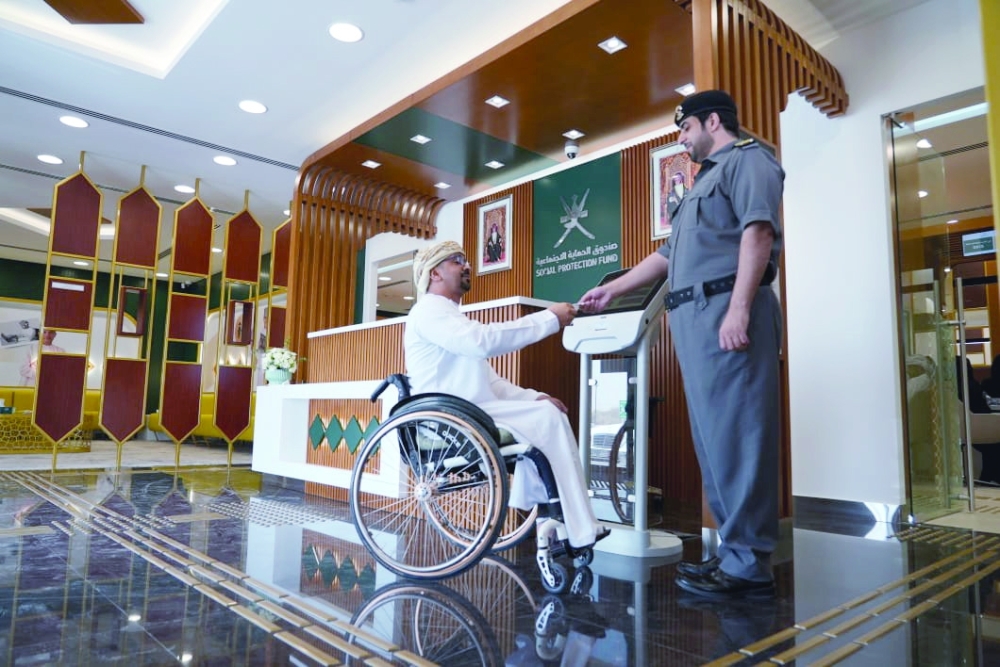
The effectiveness of social protection also depends on how easily eligible people can understand and access it. For women, this includes knowing the difference between a social benefit and an insurance-based pension, understanding the conditions of each programme, and keeping personal and household information up to date when applying for assistance.
Omani Women's Day is an opportunity to look at these provisions beyond the language of celebration. Financial security is shaped by income support, insurance coverage, retirement planning and access to accurate information, which together help women and families navigate financial uncertainty with greater confidence.
Oman Observer is now on the WhatsApp channel. Click here